The Summer Everything Stopped, Including My Escape Plan
By Caesar Sedek ·

After a summer of family milestones and administrative chaos, the realization sets in: your move abroad isn't getting closer because you are checking off boxes, but because time moves regardless of your progress. This honest reflection explores why "someday" is a dangerous trap and how to keep your Italian dreams alive when life, family, and reality attempt to stall the plan. Discover how to transition from endless researching to meaningful movement without letting the planning process become a second full-time job.
It has been a while.
Not because I gave up on Italy, abandoned the business, joined a monastery, or finally admitted that moving abroad is an elaborate coping mechanism for people who have spent too much time reading the news.
Nothing quite that dramatic.
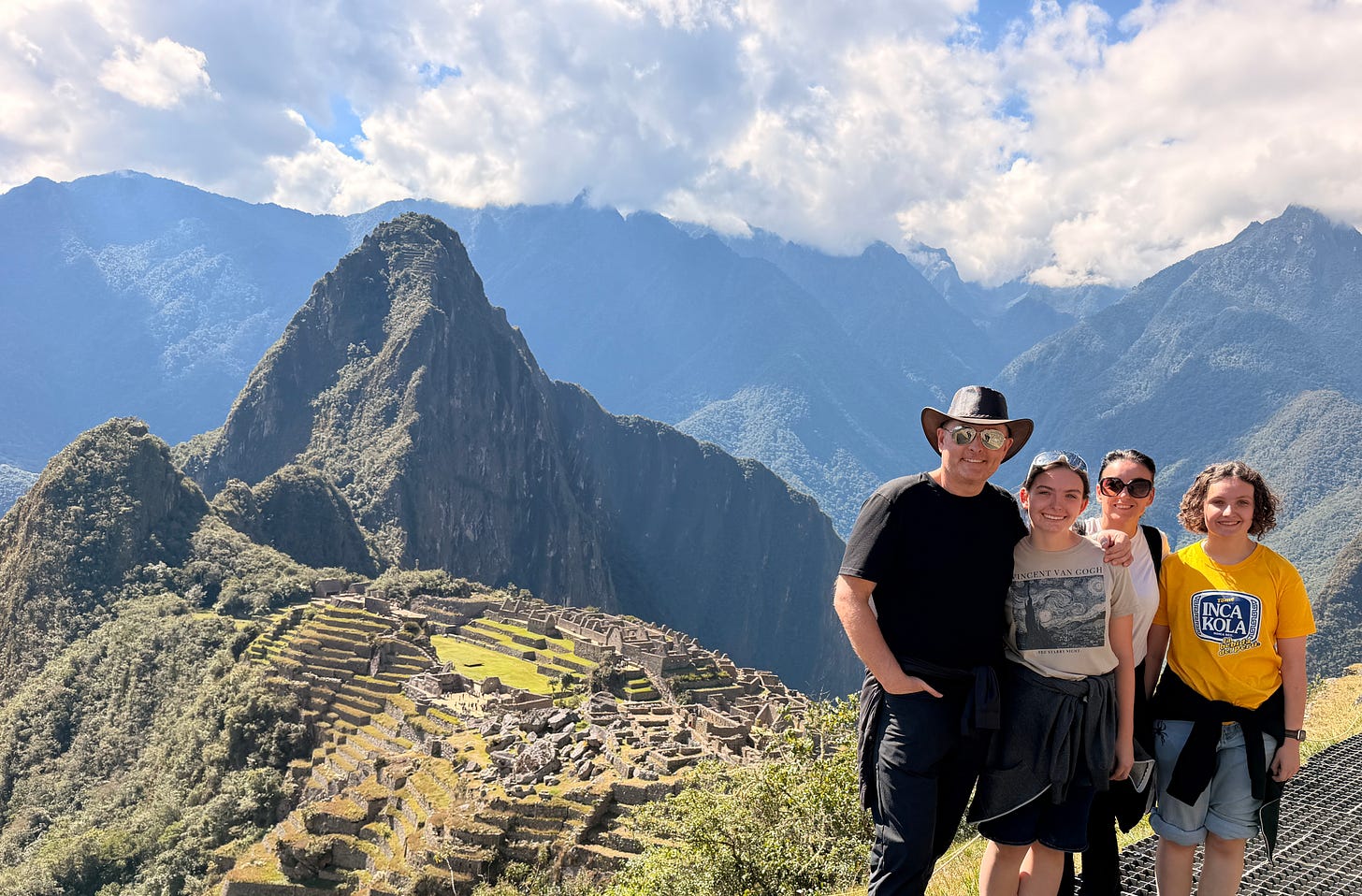
I went on vacation. Then I returned from vacation and encountered the traditional American welcome-home ceremony: several weeks of accumulated work, neglected responsibilities, unanswered messages, household projects, appointments, and the vague sense that leaving town had somehow been an act of administrative sabotage.
There is something uniquely American about needing a recovery period after taking time off. We leave work exhausted, spend several days trying to remember how relaxation works, finally begin to enjoy ourselves, and then return to discover that nothing stopped while we were gone. It merely formed an orderly queue.
Summer did what summer tends to do. It arrived with the promise of long evenings, slower days, outdoor dinners, and perhaps a little time to think. Then it filled itself with travel, work, errands, family logistics, and the persistent background hum of things that needed to be handled before September.
This year, though, there was something else.
One daughter is heading to college. The other is heading into high school.
I knew these things were coming. We had calendars. We had applications. We had forms, orientations, deadlines, purchases, discussions, and an endless stream of emails from institutions apparently determined to make the transition to adulthood as administratively complicated as possible.
Still, knowing something is coming and feeling it arrive are different experiences.
For years, my own plan to leave the United States and move to Italy has existed in that comfortable category of “future plans.” It was real, certainly. We had a target year. We researched regions. We traveled. We discussed finances, taxes, housing, healthcare, citizenship, transportation, weather, airports, and whether we could realistically survive Italian bureaucracy without one of us being arrested for excessive gesturing.
It was serious, but it was still safely ahead of us.
Then the children started moving into the next phases of their lives, and suddenly the timeline changed shape.
A few years can feel like a long time when measured in ordinary calendar pages. It feels much shorter when measured in school years, remaining family vacations, college semesters, tax returns, house repairs, and the number of summers before everyone begins building lives that no longer revolve around the same address.
That was the strange realization of this summer.
The move abroad is not getting closer because I have completed some impressive checklist. It is getting closer because time is moving whether I complete the checklist or not.
The Problem With “Someday”
Most people who talk about moving abroad do not lack information.
They have too much of it.
They have saved articles about visas, healthcare, taxes, property prices, residency permits, importing pets, buying cars, renting apartments, opening bank accounts, converting driver’s licenses, and finding a town with a hospital, train station, market, decent weather, charming architecture, reasonable prices, a strong community, and absolutely no tourists other than themselves.
They belong to sixteen Facebook groups. They follow twelve couples on Instagram who moved to Europe three months ago and now provide authoritative advice about national tax policy from a terrace in Puglia.
They have spreadsheets.
Lord, do they have spreadsheets.
What many people do not have is a sequence.
They have not decided what must happen first, what can wait, which assumptions need to be tested, and what would actually cause them to abandon or delay the plan.
The dream remains intact because it has not yet been forced to interact with reality.
“Someday” is wonderfully resilient. It requires no budget, no departure date, no uncomfortable family conversation, and no answer to the question of how much income will actually be available after employment ends.
Someday also has no natural deadline.
It can survive children graduating, careers changing, markets falling, markets recovering, elections, illnesses, promotions, recessions, home renovations, and the acquisition of yet another large object that must eventually be sold before the move.
A boat, for example. No, really - if you’re in the market for a 40’ cruiser in excellent shape - let me know!!

The danger is not that life becomes busy and the plan pauses for a while. That is normal. The danger is that the pause becomes the plan.
People rarely announce that they have abandoned the dream of retiring abroad. They simply move it farther down the calendar until the practical obstacles become larger, the emotional appetite becomes smaller, and the whole thing begins to feel irresponsible rather than exciting.
There is always a respectable reason to wait.
The children need stability. The market is uncertain. The house needs work. The dollar is weak. The dollar is strong but could weaken. Interest rates are high. Interest rates may fall. Europe is changing. America is changing. The dog is old. The dog is young. Work is demanding. Work is going well. Work is going badly and therefore must be fixed before anything else can happen.
All of these reasons may be legitimate.
Together, they can consume a decade.
Italy Has No Problem Slowing Down
This is the season when Italy begins sliding into Ferragosto mode.
Ferragosto itself falls on August 15, but anyone expecting Italian businesses, government offices, contractors, landlords, attorneys, or assorted bureaucratic actors to operate with maximum urgency during August may wish to sit down and drink something cold.
The country does not close completely, despite what frustrated foreigners sometimes claim, but the rhythm changes. Offices empty. Businesses reduce hours. Messages receive delayed replies. Entire processes seem to wander away toward the coast without forwarding information.

For Americans, this can be maddening.
We are accustomed to treating speed as evidence of seriousness. Immediate replies suggest competence. Constant activity suggests importance. A full calendar suggests that we are useful, possibly indispensable, and certainly too busy to question whether the things occupying our time are worthwhile.
Italy has a more complicated relationship with urgency.
This can be inefficient. It can be infuriating. Sometimes it is simply bad service wearing linen.
But there is also something revealing about a culture that assumes life is permitted to slow down.
The Italian summer pause does not mean nothing matters. It means not everything must happen immediately.
That distinction is difficult for many of us.
My instinct, after being away from the business and the writing, was to return with a dramatic new plan. I would update everything, restart the newsletter, rebuild traffic, increase engagement, improve the tools, revive the Facebook group, finish several articles, create new guides, and probably solve transatlantic retirement planning before lunch.
This is generally how people respond when they feel behind. We compensate with an unrealistic burst of ambition, construct a plan that could occupy a small government ministry, and then feel worse when ordinary life continues to interfere.
Perhaps the more useful response is the Italian one.
Not abandonment. Not endless delay.
A slower restart.
Your Escape Plan Does Not Need Constant Attention
A move abroad should not become another full-time job years before departure.
There are people who spend every evening researching towns they may never visit, comparing tax systems they do not yet understand, and debating minor residency scenarios that may not apply by the time they leave.
This creates the sensation of progress without always producing an actual decision.
Planning matters. I have built much of this business around the idea that planning matters enormously.
But there is a difference between planning and circling.
Good planning reduces uncertainty. Bad planning creates more categories in which to store it.
You do not need to think about Italy every day. You do not need to read every visa discussion, track every proposed tax change, or investigate every hill town that appeared in the background of a television series.
You do need to maintain contact with the plan.
That may mean one meaningful action each month.
Review the retirement budget. Schedule the scouting trip. Request the citizenship record. Meet with the tax advisor. Sell something that will not make the move. Discuss the timeline with your children. Test whether the town you loved in June is equally charming in November when it is raining and the restaurant you enjoyed is closed until Easter.
The plan stays alive through movement, not obsession.
That is what I have been reminding myself this summer.
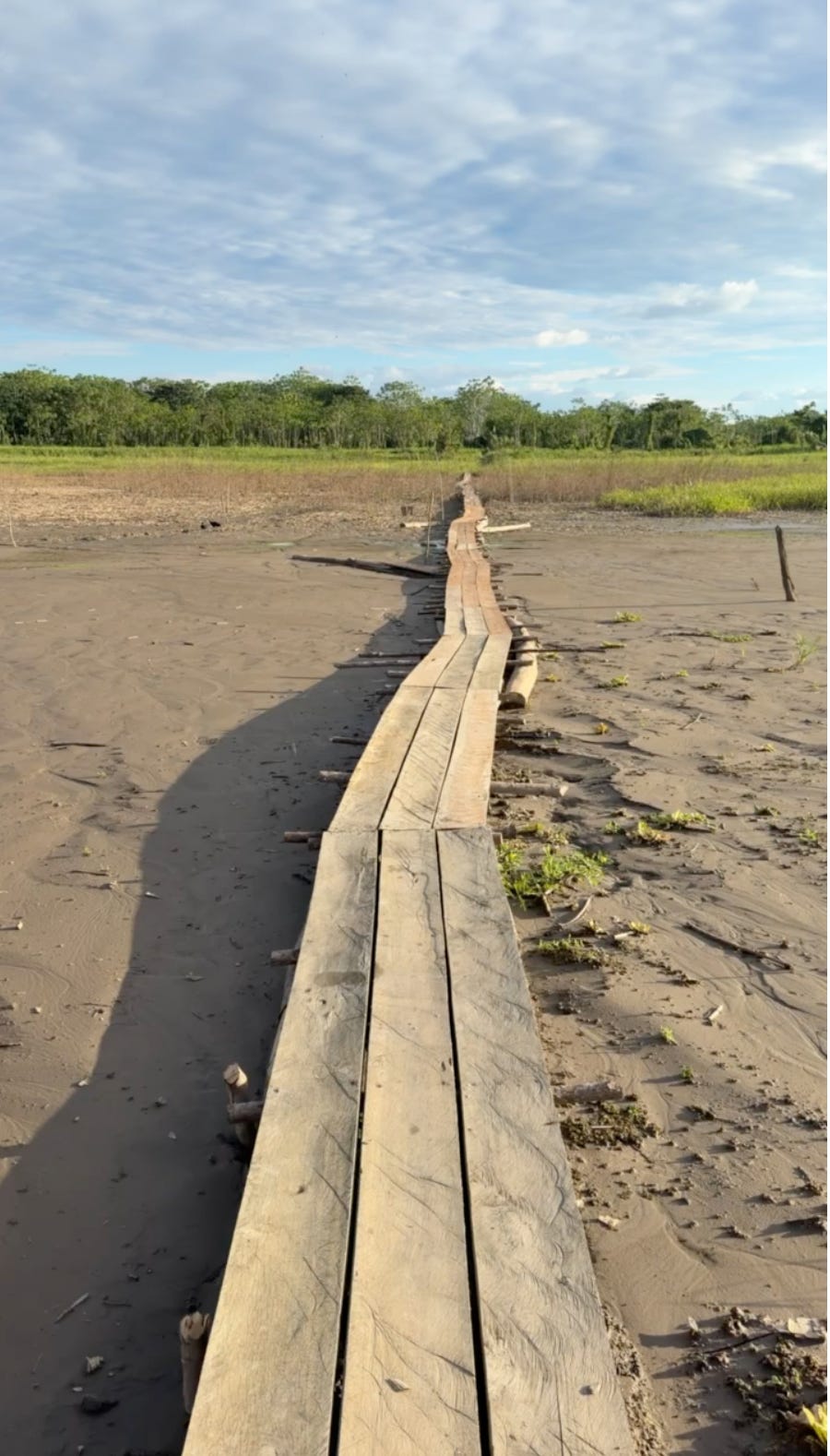
I do not need to complete the entire bridge today. I do need to keep laying boards in the correct direction (much like the path through the Amazon jungle to our remote lodge).
The Family Calendar Is Part of the Financial Plan
One of the biggest mistakes in retirement-abroad planning is treating the decision as primarily financial.
The numbers matter, of course. They matter a great deal.
How much income will you have? How will retirement accounts be taxed? What happens to Social Security? Will you rent or buy? How will you cover healthcare? What happens if exchange rates move against you? How much cash must remain available? What will happen to your house, your business, your investments, and the financial obligations you are currently pretending will resolve themselves?
These are necessary questions.
But the real departure date is often determined by family.
It is determined by children entering or finishing school, spouses who are not yet ready, parents who need care, grandchildren who suddenly make an ocean feel wider, and adult children who support the idea enthusiastically as long as they do not imagine needing help next Tuesday.
This summer made that clearer for me.
My retirement plan is linked to the children’s timelines. Their independence creates freedom for us, but it also creates a more complicated emotional landscape.
Leaving the United States sounds simple when discussed as a response to high costs, political turmoil, healthcare anxiety, stress, or the general feeling that the system has become an expensive subscription service with declining benefits.
It becomes less simple when your children are building lives here.
That does not mean the move is wrong. It means the plan must account for real people rather than treating family as a line item labeled “personal considerations.”
The emotional side of moving abroad is often discussed badly, when it is discussed at all.
People either romanticize the courage required to leave or portray departure as betrayal. In reality, most of us are trying to build a life that works while remaining connected to the people who make that life meaningful.
There is no spreadsheet elegant enough to solve that.
There are only choices, tradeoffs, frequent flights, guest rooms, video calls, and the hope that the life you build abroad becomes a place your family wants to enter rather than evidence that you escaped from them.
An August Reset
August may not be the ideal month to expect fast answers from Italy.
It is, however, a very good month to look at the American side of the plan.
Not the fantasy version. The actual version.
Here are the questions I am asking myself, and perhaps they are useful for you as well.
What is the real departure window?
Not “in about five years.” Not “after retirement.” Not “when things settle down.”
Which year? Which season? What must be true by then?
What is the largest unresolved obstacle?
Money? A spouse who is unconvinced? Children? Citizenship? Health? The house? Fear of isolation? Fear that the dream will become less appealing once it turns into ordinary life?
Most plans do not have fifty critical problems. They have one or two large ones surrounded by a cloud of smaller research projects.
What action would make the plan more real this year?
A scouting trip with a purpose. A formal financial projection. An immigration strategy. A conversation with family. A trial month abroad. Selling an asset. Beginning language study. Booking a planning session with someone who will not simply tell you that everything will be wonderful.
What are you avoiding because the answer might change the dream?
This is the unpleasant one.
Some people avoid detailed tax planning because the numbers may be less attractive than expected. Others avoid discussing the move with their spouse because enthusiasm may not be mutual. Some avoid visiting in winter because they prefer the town they remember in July.
Information can threaten the fantasy.
It can also save you from an expensive mistake.
What happens if you do nothing for another year?
Perhaps nothing serious. You may have time.
But calculate it honestly.
One fewer year to save. One fewer year to simplify. One fewer year to learn the language. One more year of property accumulation, obligations, and reasons that leaving now would be inconvenient.
Delay has a cost, even when it does not appear on a bank statement.
This Thing Is Still a Thing
So yes, I am still here.
The business is still here. The writing is still here. The tools, guides, conversations, and slightly obsessive interest in the intersection of American retirement and Italian bureaucracy are still here.
I am returning more slowly than I might have planned, which may be appropriate for an enterprise focused on Italy.
There will be new articles, updates to the planning tools, more discussion of visas and residency, deeper work on financial preparation, and more stories from people who have actually made the move.
I also want to spend more time on the part that receives less attention: the years before departure.
The waiting years.
The years when you are still working, still raising children, still maintaining the house, still dealing with American healthcare, taxes, politics, expenses, and responsibilities, while trying to build a different life somewhere beyond the horizon.
That is where most of you are.
It is where I am too.
This is not the glamorous part. Nobody posts photographs of themselves reorganizing retirement accounts, discussing eldercare, fixing a roof before selling a house, or trying to determine whether their adult children will visit if the nearest airport requires a connection through Frankfurt.
But this is where the move succeeds or fails.
Not at the consulate interview. Not at the airport. Not when the moving truck arrives.
It succeeds in the years when the dream is repeatedly interrupted and you decide, quietly, to continue anyway.
I would like to hear from you.
What is the one thing that has slowed, stalled, or complicated your plan to move abroad?
Reply, comment, or send me a message. I am genuinely curious, and your answers will help shape what I write and build next.
Perhaps your obstacle is practical. Perhaps it is financial. Perhaps it is family. Perhaps you have gathered so much information that the entire plan now resembles a doctoral dissertation conducted under conditions of mild panic.
Whatever it is, tell me.
The plan does not need to consume your life.
It does need to remain alive.