The Hidden Costs of Retiring to Italy
By Caesar Sedek ·
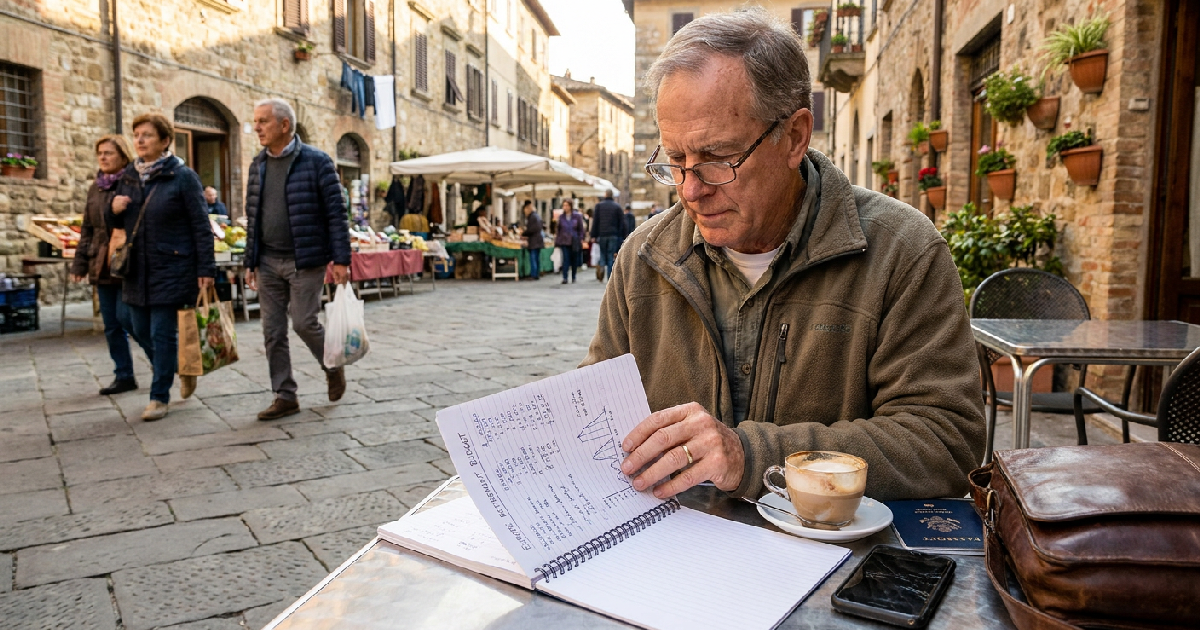
Moving to Italy can offer a dream lifestyle, but it isn't a magic fix for an underfunded retirement plan. Discover why a viral cautionary tale about shrinking savings is more about basic arithmetic than Italian bureaucracy, and learn how to distinguish between startup costs and sustainable passive income. This guide breaks down the real expenses of living abroad—from healthcare bridges to "convenience" costs—to help you build a move that is financially sound.
The Retiree Who Moved to Italy With $400K and Ended Up With $89K: What the Story Gets Right, Wrong, and Accidentally Proves
Every few months, an article makes the rounds that sends would-be retirees abroad into a low-grade panic.
This week’s version had a particularly effective headline:
A woman moved to Italy at 60 with roughly $400,000 in savings. Eight years later, she had $89,000 left.
Cue the internet.
“See? Italy isn’t cheap.”
“Nobody tells you the real costs.”
“This is why retiring abroad is risky.”
And yes, the article raises some useful points. Moving abroad is not free. Italy has bureaucracy. Housing mistakes can be expensive. Healthcare is not magically effortless just because the word “Europe” is involved. Flights back to the U.S. still cost money, tragically, airlines have not yet accepted emotional nostalgia as legal tender.
But after reading it, my reaction was not, “Italy destroyed her retirement.”
My reaction was:
This is what happens when people confuse moving abroad with fixing a retirement plan.
Those are not the same thing.
The First Question Nobody Is Asking
Before we blame Italy, let’s ask the obvious question.
How much was she spending?
The article says she went from roughly $400,000 to $89,000 over eight years.
That’s a decline of about $311,000.
Divide that by eight years and you get about $38,875 per year.
Or roughly $3,200 per month.
That’s not some mysterious Italian financial ambush. That’s a withdrawal rate.
If someone spends about $39,000 per year from a $400,000 portfolio, and does that for eight years, the portfolio shrinks.
This would be true in Rome.
It would be true in Phoenix.
It would be true in Sarasota.
It would be true in Lisbon, Valencia, or a charming little town in Abruzzo where the church bells ring every 11 minutes because apparently silence is illegal.
The problem is not Italy.
The problem is arithmetic.
The ERV Clue Hiding in Plain Sight
Here’s the part that jumped out at me.
That annual spend, about $38,000 to $39,000, is suspiciously close to the level of income Italian consulates often want to see for a single applicant applying for the Elective Residency Visa, commonly around €31,000 per year, depending on the consulate and how they interpret the requirements.
The article does not explain how she moved to Italy.
If she was an EU citizen, different story.
But if she was an American retiree without EU citizenship, there is a good chance she came through the Elective Residency Visa, or a similar pathway.
And this is exactly why Italian consulates harp on passive income.
People ask me this all the time:
“I’ve been an entrepreneur. I have plenty of money saved. Why does the consulate care so much about pensions, Social Security, investment income, or other passive income?”
This is why.
A savings account is a pile of money.
An income stream is a system.
A pile of money can disappear surprisingly fast, especially when the first few years include relocation costs, housing deposits, furniture, healthcare, tax advice, flights back to the U.S., document preparation, and the occasional charming Italian apartment where the plumbing appears to have been installed by a Renaissance monk having a nervous breakdown.
Passive income tells the consulate something different.
It suggests money is arriving every month without the applicant needing to work in Italy. It suggests the person can live within a recurring budget instead of slowly eating through capital.
That does not mean savings do not matter.
They absolutely do.
Savings are your cushion. Your emergency fund. Your “the boiler exploded and the landlord has vanished into the fog” fund.
But savings are not the same as income.
And this article, whether intentionally or not, demonstrates the exact trap the ERV rules are designed to avoid:
Someone arrives with a respectable nest egg, starts drawing from it every month, and then discovers that eight years of normal spending can do serious damage.
The consulates are not asking for passive income because they enjoy torturing applicants, although yes, sometimes bureaucracy does seem to have been designed by people who believe joy is a compliance failure.
They are asking the core retirement question:
Can you sustain this life without working and without slowly eating yourself broke?
What the Article Gets Right
Now, to be fair, the article does get several things right.
Moving to Italy Has Startup Costs
Many people budget for living in Italy. They forget to budget for becoming functional in Italy. Those are different things.
The first year can include:
Visa costs
Apostilles
Certified translations
Passport photos
Private health insurance
Flights
Temporary housing
Rental deposits
Furniture
Kitchen supplies
Household setup
Tax advice
Random fees that appear out of the mist like bureaucratic mushrooms
None of these costs are usually catastrophic on their own. Together, they can make the first year much more expensive than people expect. That first-year dip in savings is not unusual. The mistake is pretending it will not happen.
Housing Can Make or Break the Budget
The phrase “housing is cheap in Italy” needs to be taken outside and gently slapped.
Housing can be cheap in Italy.
Housing is not automatically cheap in the places many Americans actually want to live.
Historic centers, coastal towns, popular areas of Tuscany, Liguria, Puglia, Umbria, Florence, Bologna, and places with established English-speaking communities are not bargain-bin Italy.
And the cost is not just rent or purchase price. It is heating. Cooling. Condominio fees. Maintenance. Repairs. Moving costs. Furniture. Agency fees. Renovations. The emotional damage of realizing the dreamy stone house is charming because it has not been meaningfully updated since Garibaldi was in short pants. Buying can work beautifully. Renting can work beautifully. Both can also become expensive if you choose badly, rush, or confuse vacation romance with year-round livability.
Travel Back to the U.S. Is Not Optional for Many People
This is one of the most underestimated costs. People move to Italy and imagine they are leaving the U.S. behind. Emotionally, perhaps. Financially? Not always. Parents age. Children need help. Grandchildren arrive. Weddings happen. Funerals happen. Medical situations happen. Storage units back home keep quietly charging your credit card like a raccoon with a Stripe account. Many retirees end up returning to the U.S. once or twice a year. Sometimes more. That can mean flights, hotels, rental cars, pet sitting, airport transfers, gifts, meals, and temporary stays. A retirement budget that ignores travel back to the U.S. is not a retirement budget. It is a mood board.
Professional Help Costs Money
A commercialista is not free. A U.S. tax preparer with international experience is not free. Immigration help is not free. Legal advice is not free. Cross-border retirement planning is definitely not free. And for Americans, the fun never fully stops because U.S. citizens generally still file U.S. tax returns even after moving abroad. Italy may be your new home, but Uncle Sam remains in the corner, making eye contact and asking where the forms are. This does not mean moving is impossible. It means compliance needs a line item.
What the Article Gets Wrong
The article raises useful warnings, but it also has problems. Big ones.
It Presents a Vague Story Like a Case Study
We are told she had $400,000. We are told she ended with $89,000.But we are not told enough of the details that actually matter. Where in Italy did she live? Did she rent or buy? Did she collect Social Security? Did she have pension income? Did she have investment income? Was she an EU citizen? Was she on an ERV? Did she renovate property? Did she financially support family? Did she make regular trips back to the U.S.? Did she have medical or dental costs? Did her investments grow, shrink, or sit in cash? Without those facts, the article is less a documented case study and more a cautionary sketch. That does not make it useless.
It just means we should not treat it as proof that Italy is financially dangerous.
It Implies Italy Caused the Problem
This is the biggest issue. If someone withdraws roughly $39,000 per year from a $400,000 portfolio, the balance will decline. That is not an Italy problem. That is a retirement funding problem. Italy may have contributed through setup costs, housing decisions, travel, taxes, healthcare, or bureaucracy. But the core issue is much simpler:
$400,000 is not enough to support a $39,000 annual lifestyle indefinitely unless there is other income or strong investment growth.
That is true anywhere. The article makes Italy sound like the villain. But Italy may just be the place where the math became visible.
The Real Lesson: Savings Alone Are Not a Retirement Plan
This is where people get uncomfortable. A lot of Americans look at a savings number and ask:
“Can I retire in Italy with this?”
But that is the wrong first question. The better question is:
What income will I have every month, and what lifestyle does that income actually support?
Retirement is not funded by vibes. It is funded by income, assets, and spending discipline. You need to understand:
Social Security
Pension income
IRA withdrawals
Brokerage income
Rental income
Cash reserves
Healthcare costs
Tax exposure
Housing costs
Currency risk
Travel needs
Emergency reserves
A $400,000 portfolio can be a strong supplement. It can be a bridge. It can provide flexibility. But if it is the primary engine funding your life, you need to know exactly how fast you are drawing it down. Because money does not care that the piazza is pretty.
Money is rude like that.
Italy Can Be Affordable, But It Is Not Magic
Italy can absolutely offer a better quality-of-life equation for many Americans. Lower healthcare costs in many situations. Less car dependence. Walkable towns. Better food. More public life. A slower pace. A sense that life is something to be lived, not merely survived between billing cycles and open enrollment periods. But Italy is not a financial miracle machine. It will not take an underfunded retirement and sprinkle parmesan over it until the math works. You still need a real plan.
And that plan has to include boring, unsexy things like:
What happens if rent rises?
What if the euro strengthens?
What if you need dental work?
What if you need to fly home twice in one year?
What if your first town is wrong?
What if your spouse hates it?
What if you buy too soon?
What if your dream apartment is colder than a tax auditor’s handshake?
These are not reasons not to move. They are reasons to plan properly.
Why the Consulates Care So Much About Passive Income
This is where the article accidentally supports the logic behind the ERV. The Elective Residency Visa is not designed for people who want to move to Italy and figure it out later. It is designed for people who can support themselves without working in Italy. That is why consulates tend to care more about recurring passive income than large savings alone.
They want to see that the applicant is not arriving with a bucket of money and a dream, then slowly draining the bucket until the dream becomes a problem. Passive income matters because it creates rhythm. Monthly income forces monthly budgeting. It creates a spending ceiling. It reduces the risk that every unexpected expense becomes another bite out of principal. Savings are still important, but they should support the plan, not be the whole plan. This is especially hard for entrepreneurs. Many entrepreneurs are used to irregular income. They may have assets, business proceeds, cash reserves, or investment accounts. But if they do not have passive income, the consulate may still be skeptical.
Annoying? Yes. Illogical? Not entirely.
The consulate is asking:
Can this person live in Italy without working here?
Can this person absorb surprises?
Can this person remain financially stable over time?
That is not just visa bureaucracy. That is the retirement question in disguise.
What Retirees Who Succeed in Italy Usually Do Differently
The people who make Italy work are not necessarily the wealthiest. They are usually the ones who are most honest with themselves. They do not build a plan around vacation spending. They do not buy immediately because the view was nice. They do not assume every small town is cheap. They do not ignore taxes until tax season arrives wearing a cape and carrying a bat. They tend to do a few boring but powerful things:
They choose a location they can afford year-round.
They rent before buying.
They budget for healthcare transition costs.
They keep an emergency reserve.
They understand their visa and residency path.
They get tax advice early.
They plan for trips back to the U.S.
They separate fantasy spending from daily living.
They know Italy is not America with cheaper wine.
It is a different system. And different systems have different costs.
The Seven-Day Reality Check Before You Move
If this story makes you nervous, good. Not panic-nervous. Useful-nervous.
The kind of nervous that makes you open a spreadsheet instead of watching another video called “We Bought a Village House for €9 and Now We Make Olive Oil With Our Hands.” Before moving, do this seven-day audit.
Day 1: Calculate Your Real Monthly Spending
Not your fantasy number. Not your “we’ll live simply” number. The real number. Housing, utilities, groceries, restaurants, insurance, medical, taxes, travel, pets, gifts, subscriptions, repairs, professional help, and a buffer.
Day 2: Price the First Year Separately
The first year is not normal. It includes setup costs. Model it separately. Visa or residency costs, translations, apostilles, insurance, flights, temporary housing, move-in costs, furniture, tax advice, and professional help.
Day 3: Pick Housing Based on Winter, Not Vacation Season
A town that is delightful in June may be bleak in January. An apartment that is charming for two weeks may be miserable for two years. Price comfort, heating, walkability, transit, medical access, and grocery access. Not just beauty. Beauty is lovely. Beauty does not carry groceries uphill.
Day 4: Build a Healthcare Bridge
Know what you will do before you are fully settled. Private insurance? SSN voluntary enrollment? A mix? Budget for the transition period. Healthcare may be cheaper than in the U.S., but the transition is not always frictionless.
Day 5: Budget for Compliance
Assume you will need professionals. Commercialista. U.S. tax preparer. Immigration assistance. Legal advice occasionally. If you do not need all of it, wonderful. But do not pretend the category does not exist.
Day 6: Price Family Reality
How often will you return to the U.S.? Who might need you? Who will visit you? Will you help children, parents, or relatives? Emotional obligations have financial consequences. Put them in the model.
Day 7: Build an Exit Plan
This is not pessimism. It is adulthood. Keep liquidity. Know what it would cost to leave. Know what would make you change towns, regions, or countries. The best plans include escape hatches. Very on-brand, I know.
Final Thoughts
The article about the retiree who moved to Italy with $400,000 and ended up with $89,000 is useful, but not because it proves Italy is too expensive. It proves something more basic.
Retirement math still applies abroad.
Italy can be wonderful. Italy can be affordable. Italy can offer a better life for many Americans who are exhausted by the cost, stress, healthcare chaos, and general circus atmosphere of life in the United States. But Italy cannot rescue a plan that does not work on paper. The dream is allowed.
Honestly, the dream matters.
People do not move across oceans because of spreadsheets alone. They move because they want a different rhythm. A different morning. A different relationship with time. A life where errands happen on foot and lunch is not eaten over a keyboard like a raccoon guarding a sandwich.
But the dream needs structure.
That structure is income, savings, healthcare planning, tax planning, housing discipline, and a clear-eyed understanding of what life abroad actually costs. So no, the lesson is not “don’t retire to Italy.” The lesson is:
Do not expect Italy to do the math for you.
Because Italy may give you beauty, food, history, community, and a slower way of living. But the spreadsheet?
That part is still yours.