Schooling in Europe: When You’re Not Just Moving Yourself
By Caesar Sedek ·
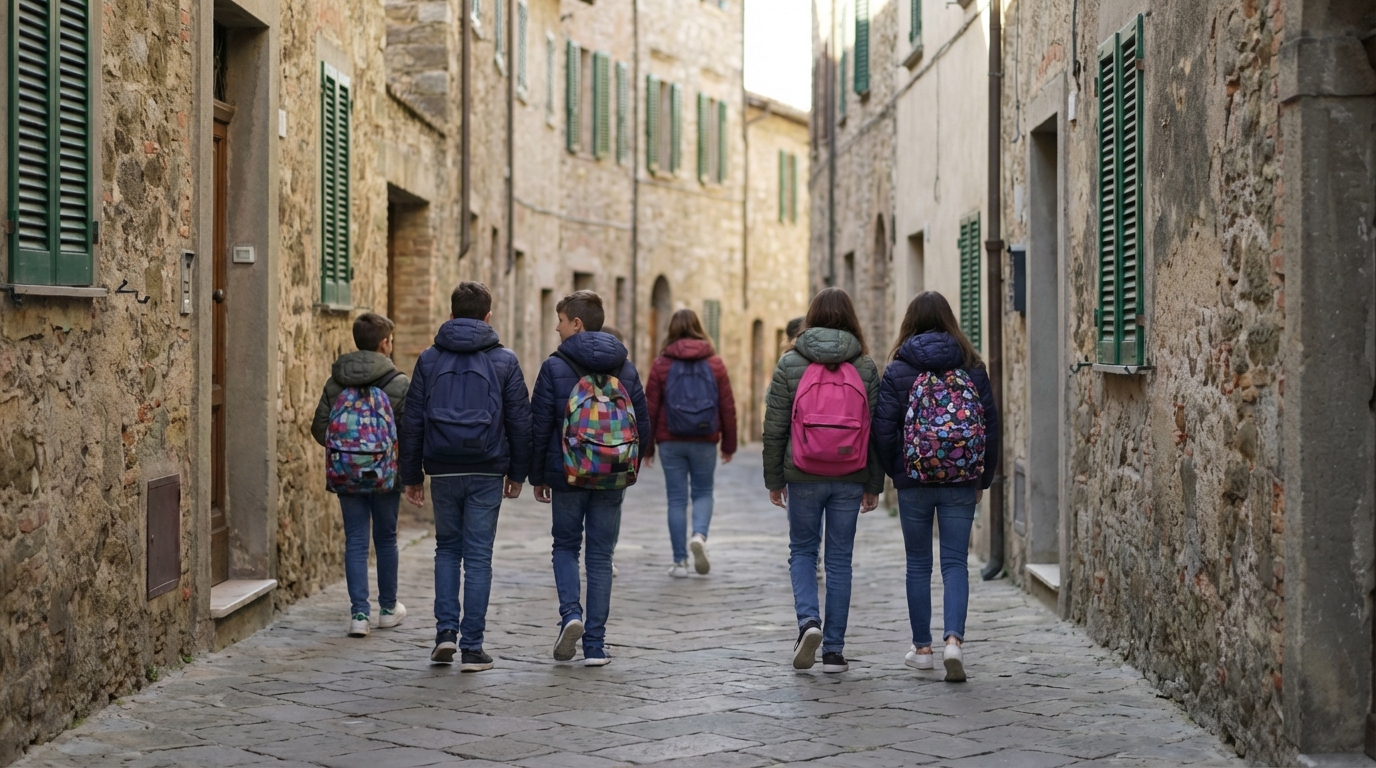
Moving a family to Europe is more than just a lifestyle change; it is a complex intervention in your children’s academic and social trajectory. This honest guide breaks down the nuances of Italian schooling, from the literal requirements of degree recognition to the long-term planning needed for high school transcripts and university admissions. Learn why navigating European education systems requires trading American flexibility for structured preparation to ensure your children land softly in their new home.
Schooling in Europe When You’re Not Just Moving Yourself
An Honest, End-to-End Look at Education, Timing, and the Things Parents Worry About at Night
I should also say this plainly, because it explains why this topic feels heavier than most of what I write. I’m not writing about schooling in Europe as an abstract exercise or a future maybe. It’s top of mind because we still have time, and that time matters. My kids have roughly four more years of life in the US before we move. Those four years are not filler. They are pivotal. For one of them, they are high school years that will shape transcripts, coursework, confidence, and options. For the other, they are college years that determine not just a degree, but whether Europe becomes a realistic continuation or an unnecessary shock.
As a parent, I don’t get to treat this like an adventure experiment. Before we ask our kids to trust us enough to uproot their lives, I need to understand every meaningful hurdle, every inflexible rule, every process that doesn’t bend just because intentions were good. I need to know what preparation looks like while we’re still here, while guidance counselors are accessible, while course choices are still adjustable, while language learning can happen gradually instead of under pressure.
This isn’t about optimizing outcomes. It’s about landing softer. About making sure that when we do move, we’re not asking our kids to absorb avoidable friction just because we didn’t do the work early enough.
That’s why this isn’t a checklist or a theory piece. It’s reconnaissance. And it’s happening now, not later, because later is when systems stop being forgiving.
When we first started talking about moving to Europe, schooling felt like a secondary problem. Not unimportant, just… later. We were thinking about visas, taxes, healthcare, housing, language, all the things adults obsess over when they imagine a different life. The kids would adapt. Kids always do. That’s what everyone says.
Then transcripts entered the conversation.
Not dramatically. Quietly. A piece of mail. A counselor email. A realization that Europe doesn’t care how good your intentions were or how thoughtful your reasons felt. It cares about structure, sequence, and proof.
That’s when it becomes real.
Most of my readers are retirees or future retirees. People planning their own escape, not dragging a school-aged calendar behind them. But some of you are moving with children. Some with teenagers. Some with kids who are smart, capable, and right at the age where the wrong timing doesn’t ruin anything immediately, but narrows options in ways you only notice later.
This article is for that group too.
It’s written from inside the same boat. We are not theorizing. We are planning around real kids, real ages, real transcripts, and the very real fear of getting this wrong.
The First Thing You Have to Unlearn
The US education system teaches parents that there is always a workaround. Summer school. Credit recovery. Holistic review. A well-written essay. A second chance baked into the system.
Most of Europe does not work that way.
European education systems, Italy especially, are built around completed cycles, not accumulated credits. Either a student has completed a recognized course of study with the required subject depth, or they haven’t. There is very little narrative interpretation.
In Italy, foreign credentials are evaluated through Universitaly under the Ministry of Universities and Research. Universities can add requirements, but they cannot waive national ones. No one is impressed by effort alone.
This isn’t cruelty. It’s clarity. And clarity cuts both ways.
Elementary School: Where Parents Struggle More Than Kids
If you are moving with young children, this is the least academically risky phase and the most emotionally destabilizing one for parents.
Italian elementary schools are public, local, and standardized. You attend the school tied to your residence. There is no admissions contest, no test prep culture, no shopping for “better” classrooms. Instruction is in Italian. Full stop. For parents coming from the US, this feels reckless. No transition program. No bilingual classroom by default. No individualized plan. Just… school.
Here’s what actually happens.
Children are confused for a while. Quiet, sometimes frustrated. They understand more than they can express. Teachers expect this. Other kids adapt faster than adults imagine. Social language comes first. Academic language follows.
What slows things down is parental interference. Pulling kids out repeatedly. Treating school as optional during “adjustment.” Switching schools because discomfort feels like failure.
Italy assumes commitment. Once you enroll, you are in. That expectation, surprisingly, is what makes it work.
International schools exist, mostly in major cities. They offer continuity and comfort, and for short stays they make sense. But they also postpone integration and language acquisition. Families planning to stay long term eventually have to decide whether they want familiarity now or fluency later.
There is no neutral choice. Only tradeoffs.
Middle School and High School: When Timing Starts to Matter
This is where the stakes quietly rise.
Italy’s secondary system branches early. Around age fourteen, students enter one of several defined tracks: academic high schools known as licei, technical institutes, or vocational programs. Each path leads somewhere specific. Movement between them is possible, but difficult. There is no American-style remixing of credits.
The endpoint is the Esame di Stato, the national exam required to complete secondary education. Without it, Italian high school is not considered finished, even if a student attended for years.
Language expectations change dramatically here. Conversational Italian is no longer enough. Students are expected to read literature, write structured essays, sit oral exams, and defend arguments out loud. This is where late entry without strong Italian becomes a real barrier.
This is also where many expat families pivot to international schools, IB programs, or decide to keep their children in US systems until graduation. Not because Italian schools are bad. Because the margin for error narrows.
Europe does not announce when doors are closing. It simply moves on.
High School Planning When Europe Is on the Table
This is the part most families underestimate.
European universities care less about how many advanced courses a student took and more about which ones. Subject depth matters more than breadth.
Math through at least pre-calculus, ideally calculus, is non-negotiable for most academic programs. Laboratory sciences matter. Biology, chemistry, and physics carry real weight. History and literature are expected, not optional.
A US transcript filled with electives, even with a high GPA, raises questions in Europe that it would never raise at home.
GPA still matters, but not the way American parents expect. There is no universal cutoff, but competitive programs generally expect the equivalent of a strong B+ to A- average or higher. Rigor is read more closely than inflation. This is where AP courses, used well, can help.
AP Calculus, Biology, Chemistry, Physics, English Language or Literature, and relevant history exams signal standardized subject mastery. Exam scores matter more than course labels. Europe understands exams. Taking ten APs is less impressive than taking the right six.
The International Baccalaureate is widely recognized across Europe and simplifies credential evaluation, but it is not a magic key. It does not waive entrance exams. It does not override language requirements. It does not guarantee admission to competitive programs.
It helps. Planning still does the heavy lifting.
Language: The Thing Everyone Delays Too Long
Language planning is where good intentions go to die.
A2 is survival. B1 is conversation. Neither is enough for academic success. Italian-taught programs require documented B2 Italian. Even English-taught programs assume students can function independently in daily life. Language learning takes years, not months. Starting earlier matters more than intensity later. This applies to parents too, whether they like it or not.
Children watch what adults model. Silence teaches more than vocabulary apps.
From US High School to University in Italy
This is the path that sounds easiest and surprises people the most.
Italy requires at least twelve years of schooling, subject alignment with the chosen degree, and documented completion of final examinations. A standard US high school diploma often needs supplementation through AP exams or IB coursework. Many programs also require entrance exams. These are not placement tests. They are competitive filters, especially in medicine, engineering, architecture, and economics.
Students are not rejected because they are unqualified. They are rejected because they are unprepared for how literal the system is.
The Cleanest Path for Many Families: US Bachelor’s, European Master’s
If you want predictability, this is it.
US bachelor’s degrees are widely recognized across Europe. Italy offers hundreds of English-taught master’s programs in economics, engineering, data science, international relations, design, and more.
Students apply as adults, not dependents. Language learning can continue alongside study. Residence pathways are clearer. The emotional pressure is lower.
For many families, this is where Europe stops being theoretical and becomes viable.
Costs: Where the Spreadsheet Changes the Conversation
This is the moment most parents stop romanticizing. A University of California education for an in-state student now runs roughly thirty-five to forty thousand dollars per year all in. Out-of-state pushes past sixty-five thousand.
Italian public universities charge tuition based on family income. EU citizens often pay between zero and four thousand euros per year. Even non-EU students typically pay far less than a single US semester.
This is not about cheapness. It’s about proportionality.
Housing and Healthcare: The Practical Stuff No One Mentions Early
Italian universities are not campus-centric. Students live in shared apartments, limited university residences, or occasionally with host families. Housing is usually arranged independently. It is cheaper, but it requires initiative.
Healthcare changes at eighteen. EU-citizen students can enroll in the Italian national healthcare system. Non-EU students typically purchase private insurance that costs a fraction of US plans. Staying on a US parent’s insurance is often impractical abroad.
These are not dealbreakers. They are adjustments. Knowing them early matters.
Studying Abroad First: A Low-Risk Reality Check
A semester or year abroad during US college is one of the smartest pressure tests available. It reveals cultural tolerance, language gaps, and daily friction without long-term consequences. Students who do this make better decisions about whether Europe is a phase or a future.
It’s not a detour. It’s reconnaissance.
When Plans Change, Because They Will
Some students switch countries. Some start in English-taught programs and transition to local languages. Some split degrees across borders. EU degrees are recognized across member states, but admissions rules remain national. Italy is one of the stricter systems. If you plan for Italy, the rest of Europe usually feels easier.
Why This Matters More Than It Sounds Like It Should
Moving abroad with kids is not just a lifestyle choice. It is an intervention in a life already in motion. Doing it well requires humility, patience, and an uncomfortable level of advance planning. Not because Europe is hostile, but because it assumes seriousness. We’re in this boat too. We’re not guessing. We’re sequencing carefully, because kids don’t get a redo on timing.
Most of my readers will never need this level of detail. But for the ones who do, I want you to know you’re not overthinking it. You’re taking it seriously. And that’s exactly what Europe expects.