Choosing a Medico di Base in Italy: The Part Nobody Explains
By Caesar Sedek ·
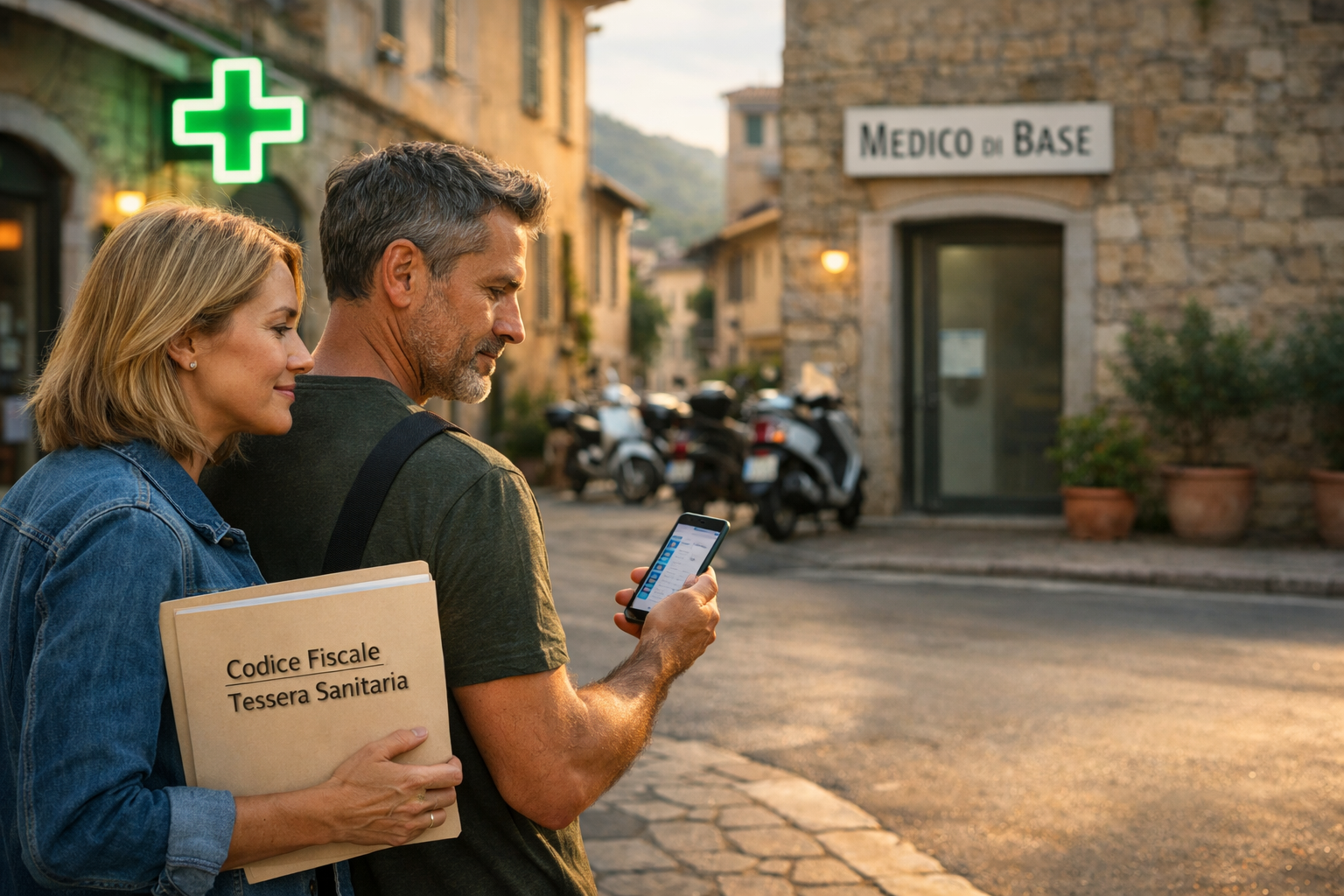
Navigating the Italian healthcare system can feel like a labyrinth, but mastering the "medico di base" is your secret key to success. This practical guide moves past the myths to explain the logistics of registration, choosing the right doctor, and balancing public and private care like a local. Learn how to manage the paperwork and the cultural nuances so you can stop being a confused tourist and start operating the system with confidence.
A real-world guide to the system, the paperwork, the choices, and the small tricks that make it feel human instead of chaotic.
People love to argue about Italian healthcare like it’s a Yelp review. “It’s amazing.” “It’s a disaster.” “My cousin’s friend waited six months for a specialist.” Cool story.
What rarely gets explained is the actual mechanics of how you get care: the steps, the documents, how you choose a doctor, how referrals work, what’s urgent vs. not, what you do when you’re new, and how to avoid wandering around like a confused tourist with a fever.
So this is the practical playbook. Not just “what Italy offers,” but how to operate the system like an adult.
I’m also writing this with a mix of firsthand exposure, not just “research.” I lived in Rome for a stretch and, while I was lucky enough not to need much medical care myself, I’ve spent plenty of time at the bedside with people who did, watching how the system actually works when you’re tired, stressed, and trying to get answers in a language that isn’t your first. So this is less theory, more field notes.
Important disclaimer in plain English: I’m not a doctor. I don't play one on TV. This is logistics and navigation, not medical advice. Also, Italy is Italy, so details can vary by region, ASL/ASST, and even the mood of the office you walk into.
The mental model: Italy has two lanes
Lane 1: Public system (SSN) for most things, structured, slower for non-urgent care, very affordable, sometimes annoyingly administrative.
Lane 2: Private care (intramoenia or fully private) when you want speed, choice, or English, and you pay more out of pocket, still usually cheaper than the U.S.
The winning strategy for most expats is not “pick one.” It’s: enroll in SSN if eligible, use SSN as your base, then selectively use private for speed or special situations. That’s the cheat code.
Step 0: What you do before you land
Do not wait until you’re sick in Italy to realize you have no medical paper trail.
Before you move, create a one-page “medical summary” document you can hand to any Italian doctor. Keep it on your phone and print two copies. Include:
Current medications (name, dose, frequency). Add the generic name if you can.
Allergies.
Major diagnoses and surgeries.
Recent labs/imaging highlights if relevant (A1C, cholesterol, thyroid, etc.).
Vaccination history if you have it.
Your U.S. physician contact info, optional.
Bonus move: get your U.S. records downloaded as PDFs from your provider portal. Italy isn’t always built around seamless record sharing, so you show up prepared.
Step 1: The gatekeeper you need to understand: the Medico di Base
The Medico di Base (also called Medico di Medicina Generale, MMG) is your primary care doctor and the “front door” to most non-emergency healthcare in Italy.
They do:
Basic care, ongoing management of chronic conditions, routine prescriptions.
Sick visits and triage.
Referrals (impegnative) for specialists and many diagnostic tests.
Medical certificates in some cases.
They usually do not:
Act like a concierge who instantly sends you anywhere because you asked nicely.
Spend 45 minutes with you, American-style, on the first visit.
Coordinate everything automatically. You are still the project manager of your own health.
If you understand that relationship, the system makes sense. If you don’t, you’ll feel blocked and annoyed.
Step 2: How you actually get into the system (SSN), practically
There are different ways people get SSN access (work, residency, certain visas, EU citizens, etc.). I’m not going to pretend one path covers everyone. But the operational concept is the same: once you’re eligible, you register with your local health authority (ASL/ASST) and obtain coverage.
What people mess up is timing and documentation.
Your local health office will typically want a combination of:
ID (passport).
Proof of legal residency status in Italy (depends on your situation).
Proof of local address/residenza or domicile documents (again, depends).
Sometimes payment receipts if you’re doing voluntary enrollment (where applicable).
Reality check: the paperwork required can vary. This is why “my friend in Tuscany did X” doesn’t always translate to your town in Liguria or Puglia.
Step 3: Choosing your Medico di Base (this is where people get stuck)
This is the heart of your angle: how do you pick your doctor, and what matters?
How it works in the real world: You typically choose from a list of available doctors in your area who are accepting patients. Some are full. Some are technically “available” but practically impossible to reach. Some are legends. Some are… present.
You select your doctor through:
The ASL/ASST office (sportello choice/revocation).
Sometimes online portals (varies).
Sometimes pharmacies can tell you who’s popular or reachable, but they’re not official gatekeepers for assignment.
What to consider when choosing (the checklist that saves you)
Accessibility and logistics
How close is the office to where you live?
Do they have predictable office hours?
Do they require appointments for everything, or walk-in windows?
Do they respond to messages, email, WhatsApp, or only phone calls?
Communication style
Do they speak any English? If not, are you comfortable enough in Italian to describe symptoms?
Are they known for being patient and explanatory, or brisk and transactional?
Age and practice style (yes, it matters)
Some older doctors are incredible. Some are stuck in 1993.
Some younger doctors use digital tools and are more reachable.
This isn’t a stereotype rule, it’s a probability game.
Network reality
Do they tend to refer within certain hospitals?
Do locals say they’re good at navigating the system?
What to ask before you commit (without sounding like a lunatic)
When are your office hours?
Do you prefer phone calls or messages for non-urgent questions?
How do I request repeat prescriptions?
If I need a referral, do I need a visit or can it be handled remotely?
That’s it. Simple. You’re not interviewing them for a TED Talk, you’re checking whether they function as a modern human.
How to “source” the best doctor locally
This is where expats miss the obvious: ask Italians, not expat Facebook rumor mills.
Best sources:
Your pharmacist. Pharmacies are basically the neighborhood intelligence service.
Neighbors in your building.
Your landlord or property agent (if they’re local and not useless).
Parents at school if you have kids.
Local bar/café owner. Seriously. If you become a regular, you’ll learn everything.
Step 4: The first appointment: what to bring and how to not waste it
Bring:
Codice Fiscale.
Tessera sanitaria (if you have it already) or proof of registration.
Your one-page medical summary.
List of medications and what you need refilled.
A short list of issues, prioritized.
In Italy, the productive approach is “one or two primary problems per visit.” If you show up with fourteen issues, you’ll either get brushed off or you’ll burn time on the wrong things.
Also: be explicit about what you want.
“I need to renew this medication.”
“I would like baseline bloodwork because I’m establishing care.”
“I’ve had this symptom for X weeks, and I’m concerned about Y.”
Step 5: Referrals, prescriptions, tests: the Italian workflow in human terms
Here’s the operational flow most people don’t understand:
You want a specialist or a test
You go to the Medico di Base first
They issue an impegnativa (referral/prescription request) when appropriate
You book the specialist/test through the public booking system (often CUP) or directly with the facility
You pay a ticket (copay) in many cases, unless exempt
You show up, do the thing, get results
You take results back to your Medico di Base (often you are the delivery system)
And yes, sometimes you’ll do this and think, “Why am I the courier?” Because that’s the system. It’s not evil, it’s just not designed like your U.S. portal ecosystem.
Step 6: Urgent vs emergency vs “I’m not dying but I’m uncomfortable”
This is a big stress point for Americans.
Emergency (Pronto Soccorso): Chest pain, stroke symptoms, severe breathing trouble, major trauma, uncontrolled bleeding. You go. No debate.
Urgent but not emergency: This is where Guardia Medica (medical continuity service) or urgent care equivalents come in, depending on region. Think: fever that won’t break, severe sore throat, UTI symptoms, acute issues outside your doctor’s hours.
Non-urgent but important: This is your Medico di Base lane: chronic issues, ongoing meds, referrals, weird symptoms that aren’t actively dangerous.
The adjustment you make in Italy is learning which lane you’re in, and not treating every discomfort like a five-alarm fire. That mindset shift alone reduces anxiety massively.
Step 7: The private option (when to use it and why it doesn’t mean you “failed”)
Private care is often the sanity valve.
Use private when:
You need speed for a specialist and the public wait time is ridiculous.
You want an English-speaking provider for something complex.
You want a second opinion quickly.
You need imaging quickly.
Two flavors you’ll hear about:
Intramoenia: private visits with doctors who also work in public hospitals, often faster access with high quality.
Fully private clinics: faster and sometimes more English-friendly.
This hybrid approach is common among Italians too, especially for dentistry, orthopedics, dermatology, and certain diagnostics.
Step 8: Medications and pharmacies: Italy’s underrated superpower
Pharmacies in Italy are not just retail shops. They’re often the first real help you get.
What to know:
Some medications require a prescription (ricetta). Some are OTC. Some are “pharmacist can guide you” but still regulated.
Bring your medication list. Ask for the Italian equivalent. Generics are widely used.
If you need repeat prescriptions, your Medico di Base typically manages that, but the workflow varies.
Pro move: pick one pharmacy near your home and become a regular. This is how you get good advice and faster problem solving.
Step 9: The language barrier: don’t aim for perfection, aim for functional
You do not need medical Italian fluency. You need survival competence.
Have a note on your phone with:
Basic symptoms vocabulary (pain, fever, nausea, dizziness, shortness of breath).
Body parts.
Time markers (da due giorni, da una settimana, da un mese).
Pain scale (da 1 a 10).
“Ho bisogno di una visita.” “Mi serve una ricetta.” “Vorrei fare delle analisi del sangue.”
If you want to be really tactical, write your symptoms in Italian before the appointment and read them. Nobody cares if it’s imperfect. They care that it’s clear.
Step 10: The expat “first 90 days” healthcare checklist
Week 1–2
Get your documentation organized.
Identify your local pharmacy.
Find your nearest hospital and Pronto Soccorso location.
Figure out who to call after-hours (Guardia Medica numbers vary locally).
Week 2–6
Enroll/register as eligible.
Choose Medico di Base.
Book first appointment for baseline and continuity.
Week 6–12
Get baseline labs if needed.
Transfer ongoing prescriptions into the Italian system.
Identify private options for “fast specialist” needs.
That’s the foundation. Once it’s in place, Italy stops feeling mysterious and starts feeling… normal.
Italian healthcare isn’t magic. It’s a system. When you learn the moves, it becomes shockingly usable. When you don’t, it feels like a labyrinth with a polite smile.
If you’re building your move plan and want the version that includes checklists, timelines, and real-world traps like this, start with the tools and guides at caesartheday.com. And If you want me to sanity-check your first-90-days setup (healthcare, residenza, banking, phone plan), that’s exactly what my roadmap consult is for.