Best Places to Live in Italy
By Caesar Sedek ·
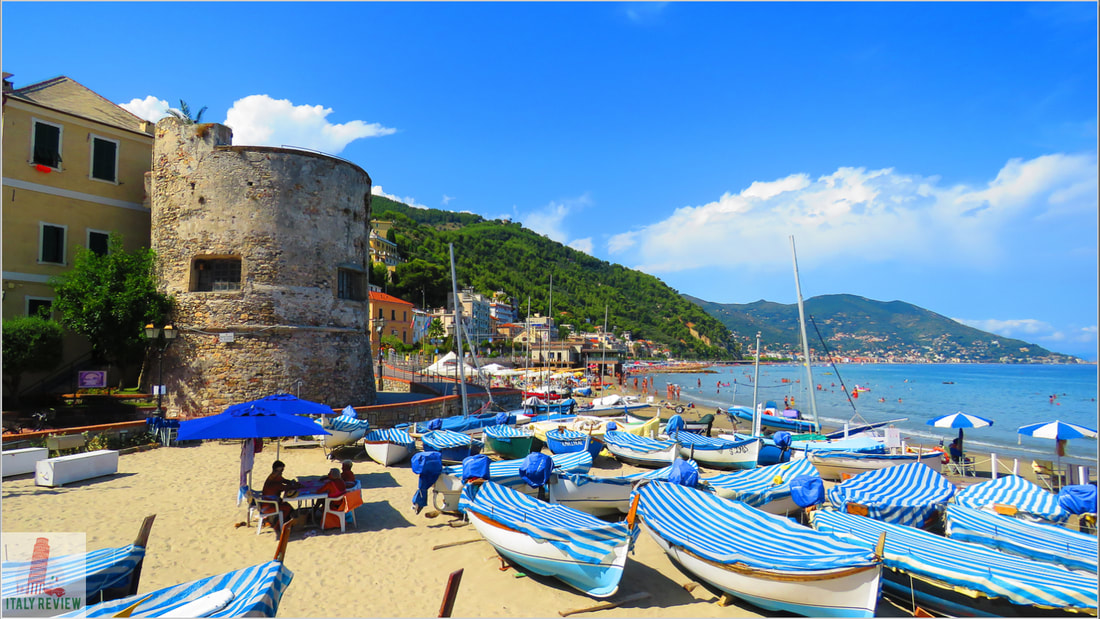
Finding the best place to live in Italy is less about picking a famous destination and more about defining the daily life you actually want to lead. This guide moves beyond vacation fantasies to explore how essential factors like climate, healthcare, and infrastructure should shape your search for a permanent home in the Bel Paese.
Where Is the Best Place to Retire in Italy?
That Depends on the Life You Want.
One of the most common answers I get when people join my Facebook group and respond to the question, “What are you most interested in learning about?” is some variation of this: Where is the best place to live in Italy? What are the best places to retire?
It is a perfectly reasonable question, and also one of the hardest to answer well.
The problem is that there really is no single best place to retire in Italy. There are places that are less expensive, places with better healthcare, places with better transportation, places with warmer winters, places with lower property prices, and places that look like someone designed them specifically for the cover of a travel magazine. But none of those qualities, by themselves, make a place “best.” The right answer depends almost entirely on what kind of life you are trying to build.
That sounds obvious until you start watching how people actually approach the decision. Most of us begin with destinations rather than requirements. We remember a week in Tuscany, a few wonderful days in Rome, a beach town we stumbled across in Puglia, or a hill village where lunch lasted three hours and nobody seemed particularly concerned about productivity. We think, I could live here.
Maybe we could. But there is a substantial difference between enjoying a place for a week and constructing an ordinary life there for twenty years.
Vacation Italy rewards beauty, novelty and atmosphere. Retirement Italy has to work on a rainy Tuesday in February when you need a dentist, your car is in the shop, the nearest train is on strike and you discover that the pharmacy closes from 12:30 to 4:00 because apparently your blood pressure should have planned ahead.
That is why I think the better question is not, “What is the best place to live in Italy?” It is, “What kind of life do I want to live, and which places in Italy make that life easier?”
That changes the entire exercise.
Start With the Life, Not the Town
Italy is not one lifestyle. Geography alone creates enormous differences between regions, and those differences become even more obvious once you stop visiting and start living there.
Life in Torino has very little in common with life in Lecce. Genova is nothing like Orvieto. Bologna, Palermo, Trieste, Sanremo, Perugia and Pescara may all be Italian cities, but the climate, infrastructure, cost of living, transportation, healthcare access, demographics and pace of life can be radically different.
Even within a single region, moving twenty or thirty kilometers can change the experience considerably. A coastal town may have reliable train service and year-round restaurants, while a beautiful inland village nearby may require a car for nearly everything. One area may feel cosmopolitan and connected, another deeply traditional and isolated. Neither is inherently better. They are simply designed for different people.
Before looking at towns, then, I would begin by describing the retirement you actually want.
Do you want to walk to restaurants, markets and a train station, or are you dreaming of a house surrounded by olive trees? Do you want to own a car forever, or would you prefer to reach a point where you barely need one? Do you want an active international community, or would you rather live somewhere where English is rarely heard? Is being near the sea essential, or would you trade the coast for mountains, vineyards or lower housing costs? How often will you travel? How important is access to a major airport? What level of healthcare do you expect to have nearby?
These questions are far more useful than a list of “10 Best Italian Towns for Retirees.”
They also make the search much more efficient. The purpose of your criteria is not to create a longer list. It is to eliminate places.
Why I Keep Coming Back to Liguria
My own search is a good example of how subjective this becomes.
After spending years looking at different parts of Italy, I keep coming back to Liguria, particularly the western side of the region: Imperia, Andora, Bordighera, Ospedaletti, Sanremo and the surrounding stretch of Riviera.
I would never tell someone that Liguria is objectively the best place to retire in Italy. It isn't. It is simply the place that checks an unusually large number of boxes for me.
Climate is probably the biggest one.
I want mild winters, and I do not particularly want to spend retirement alternating between freezing winters and punishing summer heat. Western Liguria has one of those geographic advantages that is difficult to appreciate until you spend time there. The sea moderates temperatures, while the Alps and Ligurian mountains provide protection from much of the colder northern weather. The result is a remarkably mild Mediterranean climate for a region that is still firmly in northern Italy.
That matters to me more than almost anything else.
I love Sicily. I love much of southern Italy. But I do not necessarily want the intensity of a southern summer as my everyday life, and I also value the infrastructure and connectivity that come with being in northern Italy. Liguria offers an unusual compromise: Mediterranean weather without feeling geographically disconnected from the rest of northern Europe.
Then there is the sea.
For me, that is close to non-negotiable.
I grew up around water, I have owned boats, I love boating, and I simply feel better when the sea is nearby. I can appreciate the beauty of Umbria, Toscana, Abruzzo and the interior of Le Marche. There are villages in all of those places where I could happily spend weeks. But eventually I start looking toward the horizon wondering where the water went.
That is not some universally sensible retirement criterion. It is mine.
Someone else may feel exactly the same way about mountains, vineyards, forests or being able to walk into a major opera house. The point is not that the sea should matter to everyone. The point is that everyone has something that matters to them that much, and identifying it early saves a tremendous amount of wasted research.
I Also Want an Italy That Connects to the Rest of Europe
Another reason western Liguria appeals to me is its international character.
I have enormous affection for traditional Italy. I love places where the culture is strongly local, where regional food still dominates the menu and where life does not appear particularly interested in adapting itself to visitors. That is part of what makes Italy extraordinary.
But I also know myself well enough to recognize that I enjoy being in an international environment.
The western Riviera gives me that without losing Italy.
France is next door. Monaco is next door. Nice is close enough to be part of your normal orbit rather than some major international journey. The cultural and economic corridor along that coastline has always been more porous than the border on a map suggests.
There is something deeply appealing to me about the possibility of having breakfast in Italy, lunch in Monaco and dinner in France without considering any of it particularly ambitious.
It is also not merely about novelty. International areas tend to bring more diverse restaurants, more languages, more cultural crossover and a larger population of people who have themselves chosen to live somewhere other than where they were born. I like that energy.
Someone else may hate it. They may want complete immersion in a small Italian community where the same families have lived for generations. That is a perfectly legitimate choice. It is simply a different retirement.
Again, there is no ranking system that resolves this for you.
Connectivity Becomes More Important After You Move
When people imagine retiring in Italy, they tend to think about piazzas, beaches, markets and property. Airports rarely make the fantasy montage.
They should.
Transportation infrastructure becomes much more important when a place stops being a destination and becomes your home.
Your children may still live in the United States. Friends will visit. You may need to return for family reasons. You may want to travel frequently throughout Europe. At some point there may be an emergency that requires you to get somewhere quickly.
A beautiful town that requires three trains, a bus and a prayer to reach an international airport may feel less charming after the tenth trip.
This is another reason western Liguria works for me. It sits within reach of several significant airports, including Nice, Genova, Torino and Milan. Nice in particular opens up a large network of European and international routes and is remarkably accessible from the western Riviera.
That kind of connectivity has value far beyond vacations. It changes how easily family can visit. It changes how often you are willing to travel. It even changes how isolated you feel from the rest of the world.
For me personally, this factor is especially important because most of my extended family still lives in Poland. Being close to reliable transportation and international airports is therefore not just a convenience but a practical necessity. I am less concerned about frequent travel back to the United States, since we'll be moving to Italy together as a family, but maintaining easy access to Europe—Poland for family, Amsterdam, Paris, or elsewhere for the girls' university—shapes my thinking about location more than almost anything else.
If your retirement plan includes exploring Europe rather than simply moving to one Italian town and staying there, airport and rail access deserve to be treated as basic infrastructure rather than a luxury.

Money Has a Way of Clarifying Things
Eventually the romance of location meets arithmetic.
Italy can still be remarkably affordable compared with many parts of the United States, but statements such as “Italy is cheap” are almost meaningless. Housing costs vary enormously by region, city and sometimes neighborhood.
A €350,000 budget buys one kind of life on Lake Como and a completely different one in Abruzzo. The same amount might buy a modest apartment in one desirable coastal market and a substantial detached home somewhere inland.
That does not mean you should automatically move wherever real estate is cheapest.
Cheap property can be expensive in other ways.
A very inexpensive home may require constant driving, significant renovation, higher heating costs or a long journey to healthcare. It may be difficult to resell later. It may sit in a town whose population is steadily declining and where basic services are disappearing.
Conversely, paying more for a smaller home in a well-connected town may reduce the need for multiple cars, shorten travel times and make aging in place much easier.
The better financial question is therefore not simply, “What can I afford to buy?” It is, “What lifestyle does this location require me to finance?”
I also think retirees should resist the instinct to pour too much of their available capital into the house itself. If the whole point of moving to Europe is to travel, eat well, enjoy life and have more freedom, there is little sense in owning an impressive house that consumes so much capital that you spend retirement sitting inside it.
America has already perfected that model. We do not need to export it.
Healthcare Should Be Part of the Location Decision From the Beginning
Healthcare is another factor people tend to push down the list while they are healthy.
That is understandable, but it is shortsighted.
A place that works beautifully at 58 may be far less practical at 75.
The question is not simply whether Italy has healthcare. It does. The useful questions are much more local. How far away is the nearest hospital? What specialists are available? Is private care accessible if you want it? What happens if you can no longer drive? How easy is it to reach larger medical centers?
A remote farmhouse may be idyllic when you are healthy and mobile. It becomes a different proposition if routine appointments require a forty-five-minute drive.
This is one reason I think retirement planning should include an element of aging-in-place planning even if retirement itself is still several years away.
The place you choose does not need to solve every hypothetical problem, but it should remain reasonably functional as your circumstances change.
That same logic applies to stairs, hills, parking and public transportation. Some of Italy's most beautiful towns were designed several centuries before anyone considered knee replacements.
Romance has limits.
Climate Means More Than “Warm”
Climate deserves more thought than it usually gets because “I want warm weather” is not actually a useful requirement.
Warm when?
July is warm almost everywhere in Italy. What does January look like? How humid is August? How much rain falls in November? Does the area get strong winds? Is air conditioning common? What is the air quality like in winter?
These questions produce very different answers across the country.
Parts of northern Italy can have cold, gray winters and persistent air-quality problems. Areas farther south may offer exceptionally pleasant winters but summers that become increasingly difficult for anyone sensitive to heat. Elevation can turn two nearby towns into very different climates.
This is why I tell people that if they are serious about a location, they should see it outside the tourist season.
Everyone loves Italy in May.
I want to know what it feels like in February.
The Small-Town Fantasy Needs a Reality Check
The idea of retiring in a small Italian village is powerful for obvious reasons. It promises simplicity, community, beauty and a life that feels deliberately removed from the machinery of modern America.
Some people will thrive in exactly that environment.
But small-town Italy comes with trade-offs that are often invisible during a vacation.
There may be fewer doctors, fewer restaurants, limited public transportation and little nightlife. Shops may close for long stretches during the day. Younger residents may have left for larger cities. The nearest train station may be twenty or thirty minutes away. English may be rarely spoken, which can be wonderful for immersion but challenging during your first year of dealing with bureaucracy.
None of this should disqualify small towns.
It simply means that you need to distinguish between liking a place and wanting the lifestyle that comes with it.
The same caution applies at the opposite end of the spectrum. Rome, Milan, Florence and Naples offer extraordinary amenities, culture and healthcare, but they also bring traffic, noise, crowds and higher costs.
Some retirees want that energy.
Others want to escape it.
The mistake is assuming that everyone should want the same version of Italy.
Think About the Car Before You Think About the House
One of the most useful filters is also one of the least glamorous: how dependent do you want to be on a car?
If your dream is a rural property surrounded by land, then a car will probably be part of the bargain. That may be entirely acceptable.
But if you imagine eventually living without one, or at least without needing one every day, then transportation needs to become a central part of the search.
Look for places where you can realistically walk to groceries, restaurants, pharmacies and basic services. Look at the train network. Look at bus routes. Look at the topography. A town can be technically walkable and still involve the daily ascent of what feels like a minor Himalayan range.
This matters more with age.
The best retirement town at 58 should ideally remain workable at 78.
That single test eliminates more locations than people expect.
Tourism Is Neither Entirely Good Nor Entirely Bad
Tourism creates its own trade-off.
Too little tourism can mean businesses close in winter and the town becomes quiet enough to feel abandoned. Too much tourism can turn your neighborhood into an amusement park for several months each year.
I tend to prefer places that receive enough tourism to support restaurants, cultural life and services throughout the year, but not so much that residents become background scenery in someone else's Instagram feed.
That balance is difficult to identify from a short visit.
You discover it by returning at different times of year and paying attention to what remains open when the visitors leave.
Community Is Part of Infrastructure Too
People often evaluate infrastructure in terms of trains, hospitals and airports, but social infrastructure matters almost as much.
Some retirees want an established expat community. Others recoil at the idea and insist they are moving to Italy to live among Italians.
I suspect the healthiest answer for many people is somewhere between those extremes.
You want Italian neighbors. You want to learn the language. You want to become part of the local community rather than living in an English-speaking bubble.
But there is also enormous value in knowing a few people who understand exactly what it is like to navigate Italian residency paperwork while simultaneously dealing with an American brokerage account, Medicare questions, Social Security and the sudden discovery that whatever document you need must apparently be issued in triplicate.
International communities often provide that informal support system.
They also make it easier to build friendships quickly, which becomes more important after the initial excitement of relocation fades.
People spend enormous amounts of time analyzing taxes and real estate before moving abroad and surprisingly little time thinking about who they will have coffee with six months later.
That is a mistake.
You Do Not Need to Pick Your Forever Town Immediately
Perhaps the most important advice I can give is also the simplest: rent first.
There is no prize for buying a house quickly.
If you have never lived in Italy, spending a year or two renting can be extraordinarily valuable. It allows you to test a location without forcing yourself to defend a large financial decision.
Stay through winter. See what closes. Use the healthcare system. Take the train. Drive to the airport. Go shopping. Experience the town when it is raining, when there are no festivals, and when your favorite restaurant is closed for three weeks because the owners went somewhere warmer.
That is when you begin to understand whether you actually like living there.
There is also nothing wrong with changing your mind.
You may arrive convinced that Tuscany is your destiny and discover that you really want the sea. You may assume you want complete rural tranquility and realize that you miss restaurants and cultural life. You may think you want southern Italy and eventually decide that France, Spain or Portugal suits you better.
That is not failure.
That is the purpose of doing the research.
Build Your Own Definition of “Best”
If I were helping someone narrow down Italy today, I would not begin by giving them towns. I would begin by helping them define three things: what they cannot live without, what they strongly prefer, and what they absolutely do not want.
My own non-negotiables would include a mild climate, proximity to the sea, good healthcare access, transportation and reasonable access to major airports. I strongly prefer walkability, rail connections, good restaurants, an international environment and boating access. I have very little interest in harsh winters, remote countryside, places where a car is necessary for every errand, or areas with serious air-quality problems.
Once I apply those criteria, much of Italy disappears.
That is useful.
Someone else could apply a completely different set of criteria and arrive at Umbria, Piemonte, Puglia, Abruzzo or Emilia-Romagna.
That is also useful.
The objective is not to identify the town that wins Italy.
It is to identify the place where the compromises line up with your priorities.
Because every place involves compromises.
The Ligurian coast is not inexpensive by Italian standards. Property can be tight. Some towns are crowded during summer. The geography can make parking difficult. If those things matter more to you than climate, sea access and proximity to France, then Liguria may be a terrible choice.
For me, the equation works.
For someone else, it will not.
And that is precisely the point.
The Real Test Is Wednesday
Eventually, wherever you move, Italy will stop feeling like a vacation.
The cathedral will still be beautiful, but you will stop photographing it every time you walk past. The barista will know your coffee order. You will have a preferred supermarket. You will complain about road construction. You will know which pharmacy stays open late and which restaurant has quietly become mediocre. Somewhere along the way, the extraordinary becomes ordinary, which is exactly what happens when a place becomes home.
And that is what you are really choosing.
You are not choosing the prettiest piazza, the cheapest house, or whichever town appeared on the latest “Best Places to Retire in Italy” article. You are choosing the setting for thousands of ordinary days. Where you will buy bread. Where you will walk the dog. Where friends will come for dinner. Where you will go when you need a doctor. Where you will sit with a coffee when there is absolutely nothing remarkable happening.
For me, I keep imagining those ordinary days somewhere on the Ligurian coast. The Mediterranean outside, France down the road, a boat nearby, family in Poland within easy reach, and enough of the wider world around me that Italy never begins to feel like an island.
Maybe, after we finally make the move, reality will teach me something different. I expect it will. No amount of research completely survives contact with actual life, and that is why I have no interest in declaring that I have found the “best” place in Italy before I have even lived there.
What I have found is a place that makes sense for the life I think I want.
That is really the exercise for all of us.
Before asking where everyone else thinks you should retire, figure out what your own Wednesday needs to look like. Then go find the part of Italy where that life has the best chance of happening.
And before you buy anything, spend a few Wednesdays there first.
Want to Start Narrowing Down Your Italy?
If you are still trying to figure out which part of Italy might actually fit the life you want, start with Veni. Vidi. Vici., my regional guide series at italy.caesartheday.com.
These aren't generic travel guides or another collection of “10 charming Italian towns you've never heard of.” I look at each region through the eyes of someone who might actually live there: cost of living, climate, towns and cities worth considering, transportation and connectivity, local culture and festivals, healthcare and infrastructure, and the practical realities that don't usually make it into the glossy retirement articles.
Most importantly, I try to cover the good, the bad and the ugly. Every region of Italy has all three, and if you're seriously considering making one of them home, you should know about them before you fall in love with the view from a terrace.
Explore the Veni. Vidi. Vici. Italy Regional Guides at italy.caesartheday.com, compare the regions against your own priorities, and start building a shortlist that makes sense for your retirement rather than somebody else's Top 10 list.